


November is Pancreatic Cancer Awareness Month – an annual nationwide effort to illuminate one of the most difficult cancers to detect early and to rally support for prevention, research, and survivorship. Throughout the month, advocacy groups, clinicians, scientists, and communities unite to expand public understanding, elevate patient voices, and push forward the critical need for improved screening technologies.
The purple ribbon remains the symbol of solidarity and hope. Awareness initiatives highlight key modifiable and non-modifiable risk factors such as smoking, chronic pancreatitis, obesity, metabolic dysfunction, type 2 diabetes, certain hereditary syndromes, and BRCA-related mutations. Education also focuses on early warning signs that often go unnoticed: unexplained weight loss, persistent abdominal or back pain, jaundice, digestive changes, or new-onset diabetes in adults over 50.
Updated 2025 U.S. snapshot:
An estimated 67,440 new cases of pancreatic cancer are expected this year.
Approximately 51,980 deaths are projected in 2025.
The current overall five-year relative survival rate remains 13%, reflecting the urgent need for earlier diagnosis.
When detected at a localized stage (about 15% of cases), survival improves significantly, with five-year survival around 44%.
Incidence rates continue to rise, averaging 13.8 cases per 100,000 people annually.
The 2025 mission is clear: empower the public with lifesaving knowledge, accelerate innovation in early detection, expand access to high-quality care, and support survivors and families through every phase of the journey.
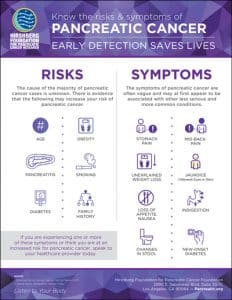 Symptoms for pancreatic cancer may include weight loss, abdominal discomfort, back pain, development of type 2 diabetes and some tumors may cause jaundice leading to earlier diagnosis.
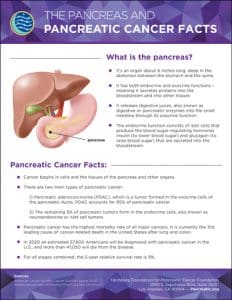
Pancreatic cancer remains one of the deadliest cancers, with survival rates far lower than most other major malignancies. For all stages combined, the five-year relative survival rate is approximately 12 to 13 percent. When the disease is found at a localized stage, which occurs in only about 15 percent of patients, the five-year survival rate increases to roughly 44 percent.
More than 90 percent of pancreatic cancers arise in the exocrine tissue of the pancreas, which produces digestive enzymes. The vast majority of these cases are pancreatic ductal adenocarcinoma, an aggressive form that accounts for the high mortality burden associated with this disease.